

Hamstring Injuries and the Lower Back: A Physio's Perspective
Key insights: 60-second read
- Hamstring injury is multifactorial - Previous injury, age, running exposure, strength, sport demands and other factors can all influence risk.
- Strength matters, but it may not explain everything - We have invested heavily in hamstring strengthening, yet recurrent injuries remain a major problem in sport.
- I think we may be looking too locally - In my clinical experience, recurrent hamstring problems often occur alongside subtle lower-back and trunk dysfunction.
- The lower back is not yet an accepted primary cause - The current sports medicine consensus is that hamstring injury is multifactorial. My experience suggests that lower-back and trunk function may eventually be recognised as a more important part of that picture.
- The question may need to change - Instead of only asking how strong and conditioned the hamstring is, we should also ask why that hamstring continues to fail when it shouldn't.
Why Do Hamstring Injuries Keep Happening?
Hamstring injuries are one of the great frustrations of sports medicine.
We know more about hamstring injuries than ever. We have sophisticated rehabilitation programs, eccentric strengthening, Nordic hamstring exercises, running progressions, load monitoring and increasingly detailed return-to-sport testing.
And yet, hamstring injuries continue to happen. Worse still, once someone has injured a hamstring, their risk of injuring it again remains substantially higher.
That raises an uncomfortable question:
This is one of the reasons I originally wrote this article.
After more than 20 years working in musculoskeletal physiotherapy, I've become increasingly interested in deciphering the root cause, not just rehabilitating the injured spot.
And when it comes to recurrent hamstring injuries, one area I think deserves more attention is the lower back and the way the trunk interacts with the legs during movement.
I want to be clear about where this idea currently sits. The accepted view in sports medicine is that hamstring injury is multifactorial. I agree with that. What I question is whether the lower back and trunk are sometimes being underappreciated within that multifactorial picture.
I don't believe the evidence currently allows us to say that lower-back dysfunction is a primary cause of hamstring injury. My belief is more modest: clinical experience has led me to recognise that it may be a more important piece of the puzzle than we currently realise.
On this page
Cyril Rioli: A Useful Case Study
Cyril Rioli was one of the most exciting AFL footballers of his generation. Quick, agile and exceptionally powerful, he was also someone who experienced repeated hamstring problems during his career.
Cyril suffered approximately seven known hamstring injuries over several seasons, despite his clear athletic and footballing gifts.
What makes his story interesting isn't simply the number of injuries. It is what happened when his preparation changed.

Hawthorn changed several aspects of his preparation over this period, including running, his playing role and strength program. Before the 2015 season, Rioli described doing substantially more running and hill sprints and said he felt stronger in his legs.
He subsequently returned to playing regularly and remained much less troubled by his hamstrings.
That is an important observation, but I think there are two different ways we can interpret it.
The first is straightforward: he needed to get stronger.
The second is more interesting: perhaps increasing his physical capacity gave his body enough margin to tolerate a problem that had not necessarily been completely understood.
I don't think we can know from this case alone which explanation is correct. But it illustrates the broader question I want to explore in this article.
If strengthening the hamstring is the answer, why do some athletes continue to suffer recurrent injuries despite focusing so much on hamstring strength?
Perhaps the answer isn't that someone is "weak", but that strength is only one part of the equation - but you have to take a step back to see the bigger picture.
Understanding the Hamstrings: More Than Just Three Muscles
The hamstrings are a group of muscles at the back of the thigh, primarily the biceps femoris, semitendinosus and semimembranosus.
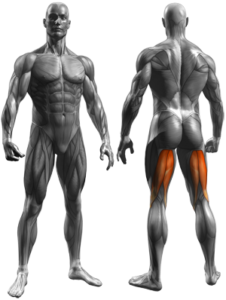
They cross both the hip and knee, meaning they contribute to hip extension and knee flexion while also helping control movement of the pelvis and trunk.
That last point is particularly relevant to this discussion.
The hamstrings don't operate in isolation. They are part of a movement system involving the pelvis, spine, hip, knee and ankle. During running and sprinting, they are exposed to very high forces and have to coordinate with the rest of the body extremely quickly, but importantly, they are designed for this.
So perhaps asking whether the hamstring is strong enough is only part of the question.
We should also ask:
- How is the load being distributed to the hamstring?
- How is the pelvis being controlled?
- How is the trunk functioning?
- How much high-speed running is the athlete exposed to?
- Are there contributing factors outside the hamstring itself?
What Does the Research Actually Tell Us?
The current evidence doesn't give us a simple answer.
A major 2020 systematic review and meta-analysis published in the British Journal of Sports Medicine examined 78 studies involving more than 71,000 athletes and more than 8,300 hamstring injuries.
The strongest risk factors identified in the meta-analysis included older age and a history of previous hamstring injury. A recent hamstring injury was particularly important, with the review reporting substantially higher risk of another injury when the previous injury had occurred in the same season.
The review also found evidence that factors relating to running, sports performance, match play and strength were relevant.
But there is an important nuance here.
When the researchers examined individual strength-related variables in their meta-analysis, none of the 13 strength variables they assessed showed a statistically significant association with hamstring injury risk.
While strength is clearly important clinically, the relationship between strength and injury is probably more complicated than simply measuring how strong a hamstring is and assuming that number tells us who will get injured.
The authors ultimately described hamstring injury as multifactorial and called for more research into how different risk factors interact over time.
That is where I think this conversation becomes particularly interesting.
Is Hamstring Strength the Whole Answer?
I want to be very clear here: I am not arguing against hamstring strengthening.
Quite the opposite.
Hamstring strengthening is an important part of rehabilitation and preparation for running and sport. Building the capacity of an injured muscle makes sense, and the broader evidence supports the importance of strength and physical capacity.
But there is a difference between saying strength matters and saying strength explains why this particular hamstring keeps getting injured.
Those are not the same thing.
Imagine a car with an engine that has been upgraded to produce considerably more power. If the suspension, steering or alignment is still problematic, making the engine stronger doesn't necessarily address the entire problem.
The same principle may apply to the human body.
You can make a hamstring considerably stronger. But if the way the pelvis, trunk and leg interact during running is still exposing that hamstring to excessive or poorly distributed load, increasing strength may simply increase the amount of capacity available to tolerate that problem.
That is one of the reasons I think recurrent hamstring injuries deserve a broader assessment.
What I'm Finding Clinically: Are We Looking Too Locally?
This is where my own clinical experience comes into the discussion.
After more than two decades working with musculoskeletal problems, I've developed a habit of looking beyond the painful structure.
If someone has knee pain, we can't just examine the knee. If someone has shoulder pain, we also need to look beyond the shoulder. And if someone repeatedly injures a hamstring, I don't think we should automatically assume that the hamstring itself is the entire problem.
Over many years, I've repeatedly noticed subtle lower-back and trunk dysfunction in people presenting with hamstring problems.
Sometimes there is obvious lower-back stiffness or pain. But often there isn't.
The findings can be much more subtle: reduced lumbar movement, altered pelvic control, difficulty maintaining trunk position during movement, or a change in hamstring range when the position or control of the trunk is altered.
And when I repeatedly see a similar pattern clinically, I think it's reasonable to ask whether there is something here that deserves more attention.
And this is really the reason I wrote this article.
I'm not trying to replace the current hamstring injury model. I want to question whether the model is complete.
Could the Lower Back Influence Hamstring Symptoms?
One possible connection involves the nervous system.
The sciatic nerve is formed from nerve roots arising from the lower spine and supplies the hamstrings.
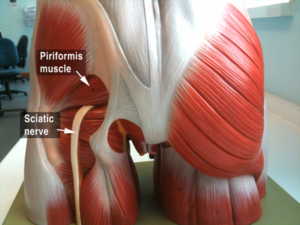
I find that restrictions in the joints and soft tissue at the lower back have a meaningful impact on hamstring strength, mobility, and function.
More importantly, improving the mobility, strength, and control of the trunk and lower back can immediately improve how a person's hamstrings feel and function.
It suggests that the relationship between the spine, nervous system, pelvis and hamstring is worth considering.
Spinal Control May Matter as Much as Core Strength
Another distinction I think is important is the difference between core strength and trunk control during movement.
Someone can be very good at holding a plank and still have poor control of their trunk during running, cutting, accelerating or changing direction.
Sport doesn't happen in a plank.
During movement, the trunk, pelvis and legs have to coordinate dynamically. The hamstrings are part of that system.
From a clinical perspective, I am interested in whether a person's trunk is providing an effective platform for the pelvis and legs to work from, particularly when the demands of movement increase, or whether the hamstring is forced to make up the difference.
Again, I would not describe this as an established explanation for hamstring injury, but my clinical experience has shown me that it's important nonetheless.
What About Sitting and Posture?
This is another area that I find gets overlooked far too often when trying to understand why a person's hamstring has failed.
Ultimately, everything has to happen for a reason. If I find that a person's lower back is directly influencing their hamstring function, there has to be a reason why their lower back has becone dysfunctional in the first place.
And when we look at the basic shapes and positions a person puts their back into the most throughout the day - athlete or not, things tend to line up perfectly.
If someone spends large parts of their day sitting, rarely moves their spine through its available range and then asks their body to sprint, accelerate and change direction at high speed, I think it is reasonable to consider whether their overall movement capacity is adequate for the demands they are placing on it.
Bringing it back to Cyril for a moment. Back when he was playing, I creepily stalked Instagram for examples of what I'd expect to see from him based on what I find clinically.
And interestingly, there were many examples of Cyril sitting and slouching into a poor spinal shape and position. Obviously this doesn't guarantee anything, but it fits the profile I find clinically. Where the hinge goes, the load goes.

So while Cyril was always the fastest, most agile and athletically gifted athlete, he may not have been at his best physically if he'd been carrying around hidden back dysfunction the whole time.
In short, poor postures and shapes when you aren't being active may mean you take hidden dysfunction into your more athletic moments, and something else can suffer.
The hamstring may simply be the structure that eventually suffers.
How I Approach Recurrent Hamstring Problems
If someone has injured their hamstring once, we still need to rehabilitate the hamstring properly.
But if we want to prevent it from occurring or someone keeps injuring the same hamstring despite doing the "right" things, I think it is time to widen the assessment.
That might include looking at:
- Lower back joint mobility
- Trunk muscle strength, activation, and control
- Sciatic neural tension
- Sitting postures and shapes
- Hamstring strength and capacity
In other words, how is the whole system functioning, and how is the hamstring tolerating this function?
In my experience, we need to stop looking at the hamstring as an isolated issue, and take a step back to consider how the spine may set it up to fail.
That distinction is important.
The Bigger Question
The current evidence tells us that hamstring injury is multifactorial. I don't think we should throw away the things we know work.
But perhaps our next step forward isn't finding an even better way to isolate and strengthen the hamstring.
Perhaps it is understanding how the hamstring interacts with the rest of the body - particularly the spine.
This is ultimately the narrative I would like to see change.
Instead of asking, "What about the hamstring caused it to fail?" or "How do we strengthen it further?", perhaps we should also be asking, "What isn't the hamstring tolerating?"
The answer will turn out to be slightly different for each person, but there is a reasonable possibility that the lower back will eventually become recognised as more relevant pieces of that puzzle down the track.
Frequently Asked Questions
Why do hamstring injuries keep coming back?
Hamstring injuries are multifactorial. Previous injury is one of the strongest known risk factors, but running exposure, age, strength, sport demands and other factors can also contribute. In recurrent cases, I believe it is worth looking beyond the hamstring itself and assessing the whole movement system, including the lower back, as it may set the hamstring up to fail.
Does hamstring strengthening prevent hamstring injuries?
Strengthening is an important part of hamstring rehabilitation and preparation for sport, but strength alone does not explain every hamstring injury. The evidence suggests that hamstring injury involves multiple interacting risk factors, which is why I believe rehabilitation should consider the wider movement system as well.
Can the lower back affect the hamstring?
The lower back, pelvis, nervous system and hamstring are mechanically and neurologically connected. Changes in spinal or pelvic position and function alter hamstring mechanics, leaving the door ajar for potential injury. However, despite my strong clinical findings, lower-back dysfunction has not yet been established as a primary cause of hamstring injury, so this should be considered as one possible contributing factor rather than a universal explanation at this stage.
What was Cyril Rioli's hamstring injury history?
The case history presented in this article tracks seven hamstring injuries over several seasons. AFL reporting also confirms that Rioli missed 21 games because of hamstring problems across two seasons before changing his preparation, including substantially more running, hill sprints and strength work. My experience would suggest that his poor back function - especially when sitting - may have set him up to fail.
Should I stop doing hamstring exercises?
No. Hamstring strengthening remains an important part of rehabilitation and athletic preparation. The point of this article is not to replace local hamstring rehabilitation, but to encourage a broader assessment when injuries keep recurring despite appropriate strengthening and rehabilitation.
The key takeaway
Hamstring strength matters. But recurrent hamstring injury may require us to ask a bigger question: what is setting the hamstring up to fail?
I genuinely hope this article offers a different way of thinking about recurrent hamstring injuries.
I'm not suggesting that I have solved the hamstring injury puzzle, and I'm certainly not suggesting that hamstring strengthening should be abandoned. My intention is to challenge the idea that the answer will always be found by looking at the hamstring alone.
After more than 20 years in musculoskeletal physiotherapy, I have become increasingly convinced that the body needs to be assessed as a connected system. I would expect future research to ultimately support the role I suspect the lower back plays, but that remains to be seen.
But I think it is a question worth asking and exploring.
If you have a different issue, or simply want to learn more about how your body moves, head over to the Your Wellness Nerd YouTube channel.
– Grant
Living With a Persistent Sports Injury?
If you've had a recurring hamstring problem despite appropriate rehabilitation, it may be worth taking a broader look at the factors contributing to your symptoms and movement.
Want personalised guidance?
If you'd like help making sense of your aches, pains, or ongoing symptoms, you can book with Grant either in Port Macquarie or via an online telehealth consultation.


